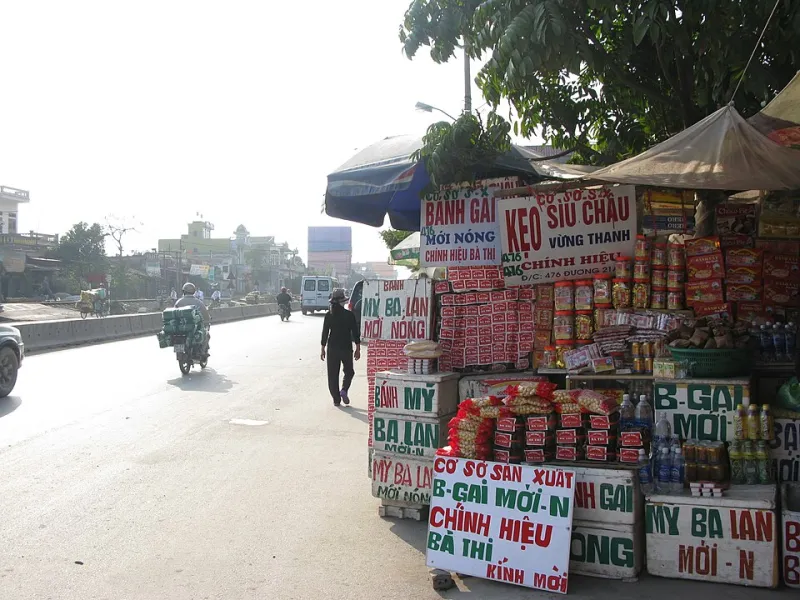
Why Your Neighborhood Vietnamese Retailer Beats Amazon on Price (And How to Find Them)

Photo: Data: Marc Imhoff/NASA GSFC, Christopher Elvidge/NOAA NGDC; Image: Craig Mayhew and Robert Simmon/NASA GSFC, Public domain, via Wikimedia Commons
If you've ever compared prices on a bag of jasmine rice, a bottle of fish sauce, or even a pair of running shoes between a Vietnamese-owned online store and Amazon, you may have done a double-take. The smaller shop was cheaper — sometimes by a lot. That's not a coincidence, and it's not a clearance sale. There's a whole pricing structure working behind the scenes that consistently puts Vietnamese-owned US retailers ahead on value.
Let's break it down.
The Overhead Gap Is Bigger Than You Think
Amazon and Walmart are enormous operations. Their scale is impressive, sure, but scale comes with costs. Fulfillment centers, massive payroll, shareholder expectations, advertising budgets in the billions — all of that gets baked into the price you pay at checkout.
Vietnamese-owned online retailers, especially those run by first- and second-generation immigrant families, tend to operate with a much leaner footprint. Many are home-based or use small warehouse spaces. Family labor is common. Marketing often happens through word-of-mouth, WeChat groups, or tight-knit community networks rather than expensive ad campaigns. When you cut those overhead layers, the savings have to go somewhere — and they often go straight to the customer.
A 2023 analysis by the Small Business Administration found that small, ethnic-minority-owned retail businesses in the US spend, on average, 18–22% less on operating costs per dollar of revenue than their large-box counterparts. That's a meaningful margin, and Vietnamese-owned retailers are a strong example of this trend in action.
Direct-to-Source Sourcing Is a Real Advantage
Here's where it gets interesting. Many Vietnamese-American business owners maintain active relationships with manufacturers and wholesalers in Vietnam, Taiwan, and other parts of Southeast Asia — relationships that go back decades, sometimes generations. They're not buying through a middleman distributor. They're calling a cousin, a longtime supplier, or a factory contact they've worked with since before Amazon was even a thing.
This kind of direct sourcing removes at least one — sometimes two — layers of markup from the supply chain. A specialty grocery item that passes through an importer, then a distributor, then a regional warehouse before landing on Amazon might have a 40–60% markup baked in by the time it reaches your cart. A Vietnamese-owned retailer buying the same product directly from the source and shipping it to a US customer? They can often sell it at 20–30% less while still making a healthy margin.
For mainstream products — electronics accessories, household goods, personal care items — the same logic applies. Vietnamese-owned sellers often source directly from manufacturers in Asia, bypassing the domestic distribution chains that inflate prices at larger retailers.
Platform Fees and the Amazon Tax
If you've ever sold anything on Amazon, you know about the fees. Referral fees, fulfillment fees, storage fees, subscription fees — they stack up fast. Third-party sellers on Amazon typically lose 30–40% of their revenue to the platform before they see a dollar of profit. Those fees don't disappear; they get passed to the buyer.
Vietnamese-owned retailers who operate their own websites — or sell through lower-commission platforms — avoid this "Amazon tax" entirely. A product listed for $18 on a family-run Vietnamese online store might be $26 on Amazon simply because the Amazon seller needs to cover their platform overhead. Same product, same quality, very different price.
Where to Actually Find These Deals
Okay, so this all sounds great — but how do you actually find these retailers? Here are some practical starting points for US shoppers:
Search with intent. Instead of going straight to Amazon, try Google Shopping searches with terms like "Vietnamese grocery online US," "direct import Asian foods," or the specific product name alongside terms like "family-owned" or "Vietnamese-American seller." You'll often surface smaller sites with better prices.
Check community marketplaces. Facebook Marketplace and local Facebook groups for Vietnamese-American communities often have sellers offering both specialty products and everyday goods at below-market rates. These aren't sketchy — they're often small business owners testing products or selling surplus inventory.
Look at specialty e-commerce directories. Sites that curate Asian-American-owned businesses, like Gold House's shopping guides or community-run directories, often list verified Vietnamese-owned retailers. These businesses have reputations to protect and prices to compete on.
Don't overlook direct store websites. Many Vietnamese-owned retailers have their own .com sites that don't rank well on Google simply because they haven't invested in SEO. If you find a seller you like on Etsy or a marketplace, check if they have a direct website — buying there often saves both of you money.
The Quality Question
Some shoppers hesitate because they assume a lower price means lower quality. That's a fair concern, but with Vietnamese-owned retailers, the opposite is often true for specialty items. A family importing pho spice kits directly from a trusted supplier in Hue isn't cutting corners — they're cutting out the distributor. The product is often fresher, more authentic, and better than what you'd find in a generic Amazon listing.
For non-specialty items, the same due diligence applies as with any online purchase — check reviews, verify return policies, and look for clear contact information. Reputable Vietnamese-owned retailers are usually responsive and community-focused; their business depends on trust in ways that Amazon's algorithm-driven marketplace simply doesn't.
The Bottom Line for Smart US Shoppers
Big-box convenience is real. Amazon's two-day shipping and Walmart's price-match guarantees are genuinely useful. But if you're willing to spend five extra minutes searching, Vietnamese-owned online retailers can save you real money — especially on specialty foods, household imports, and direct-sourced goods.
The pricing advantage isn't a gimmick. It's the result of leaner operations, smarter sourcing, and a business culture built on community trust rather than quarterly earnings reports. For shoppers who want both value and authenticity, that's a combination worth seeking out.
Next time you're about to hit "add to cart" on Amazon, do a quick comparison. You might be surprised what you find.