Real vs. Fake: Your No-Nonsense Guide to Buying Authentic Vietnamese Products on Amazon, Walmart, and Etsy
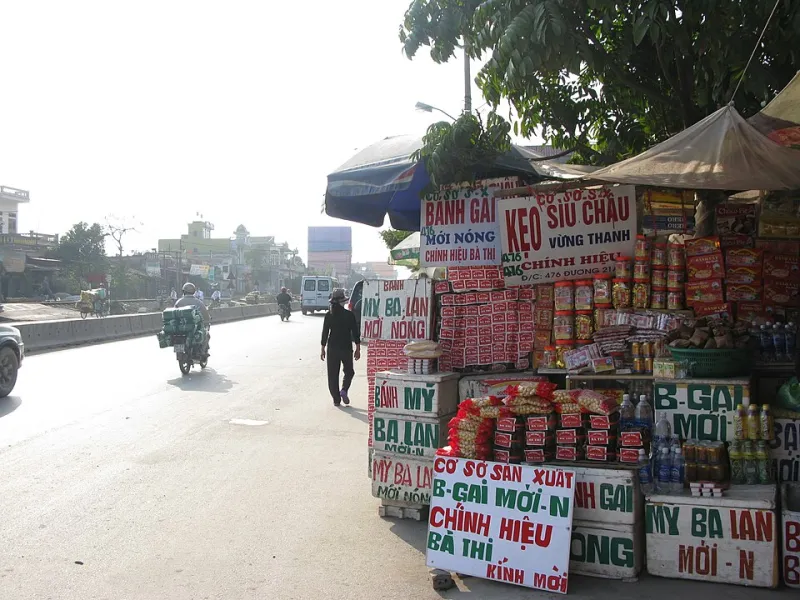
Photo: Phó Nháy, Public domain, via Wikimedia Commons
Let's be honest — shopping for Vietnamese products on major US marketplaces can be a little wild. Between the genuine gems and the questionable listings that claim to sell "authentic Vietnamese" anything while shipping from a warehouse with zero connection to Vietnam, it's easy to end up with something that's more imitation than the real deal.
We get it. At Siêu Thị Vai Ký, helping shoppers find real value on Vietnamese goods is literally what we're here for. So we put together this practical, no-fluff guide to navigating Amazon, Walmart, and Etsy when you're on the hunt for the genuine article — whether that's a bottle of Phú Quốc fish sauce, a jar of authentic Vietnamese coffee, a handwoven home good, or a cult-favorite beauty product.
Why It Matters: The Counterfeit Problem Is Real
First, a quick reality check. Counterfeit and mislabeled products are a legitimate issue across all three of these platforms, and Vietnamese goods are not immune. Some sellers slap "traditional Vietnamese recipe" on a product that's never been within 5,000 miles of Vietnam. Others list genuine-sounding brand names that are actually copycat labels designed to ride the reputation of well-known Vietnamese products.
Beyond the annoyance of getting ripped off, there's a real concern with food and beauty products specifically: counterfeit versions may not meet the same safety or quality standards as the authentic item. That's not a risk worth taking for the sake of saving two bucks.
Amazon: Biggest Selection, Highest Risk, Best Deals If You Know How to Look
Amazon is where most American shoppers start, and for good reason — the selection is massive. But that size cuts both ways.
What to look for:
- Sold by vs. Fulfilled by Amazon: Pay close attention to who's actually selling the product. "Fulfilled by Amazon" (FBA) just means Amazon stores and ships it — it doesn't mean Amazon vetted the authenticity. Check the actual seller name.
- Brand storefront: Many legitimate Vietnamese brands have official brand storefronts on Amazon. If you're buying Chin-Su, Trung Nguyên, or Bà Rịa-Vũng Tàu fish sauce, look for the brand's own storefront rather than a third-party reseller.
- Review patterns: A product with 4,000 reviews and a suspiciously uniform 5-star rating deserves skepticism. Look for detailed reviews that mention specific product characteristics — smell, taste, texture, packaging details.
- Price anchoring: If a product is selling for significantly less than what you'd find at your local Asian grocery store, ask yourself why. Authentic Vietnamese fish sauce, premium Vietnamese coffee, and quality skincare products have real production costs.
Red flags on Amazon:
- Generic product photos with no Vietnamese language on packaging (the real thing almost always has Vietnamese labeling)
- Seller location listed as outside Vietnam or the US with no explanation
- Product descriptions that are vague about origin ("Asian-inspired" is not the same as Vietnamese)
- Listings with no brand name, just generic category descriptors
Best categories to shop on Amazon: Vietnamese coffee (Trung Nguyên, Highlands Coffee), pantry staples from established brands, and Vietnamese beauty brands that have set up official US distribution.
Walmart Marketplace: Underrated for Certain Vietnamese Goods
Walmart's online marketplace doesn't get as much attention as Amazon in the Vietnamese goods space, but it's worth a look — especially for food products from brands that have secured US distribution deals.
Large Vietnamese food brands like Chin-Su and Vifon have been expanding their US retail presence, and Walmart has become a distribution channel for some of their products. The advantage here is that Walmart's supplier vetting process for branded food products tends to be more rigorous than Amazon's open marketplace.
What Walmart does well:
- Stocking well-known Vietnamese instant noodle brands (Vifon, Mama, etc.) at competitive prices
- Carrying Vietnamese-inspired condiments and sauces from brands with US distribution
- In-store pickup options at locations near Vietnamese-American communities, which can be a useful way to inspect packaging before fully committing
Where Walmart falls short:
- The marketplace is less developed for artisan, handmade, or specialty Vietnamese products
- Smaller Vietnamese-owned sellers have less presence here compared to Amazon or Etsy
- Selection for beauty and home goods is limited compared to the other platforms
Pro tip: Use Walmart's site to price-check branded Vietnamese food products you've already identified as authentic — it's often the cheapest option for those specific items.
Etsy: The Best Spot for Handmade and Artisan Vietnamese Products
If you're shopping for handcrafted Vietnamese goods — lacquerware, hand-embroidered textiles, traditional áo dài accessories, artisan ceramics, or handmade jewelry — Etsy is your best bet by a wide margin. The platform's focus on handmade and vintage items naturally filters out a lot of the mass-produced counterfeit noise.
How to vet sellers on Etsy:
- Read the seller's "About" section carefully. Legitimate Vietnamese artisan sellers typically share their story, their location (in Vietnam or Vietnamese-American communities in the US), and their production process.
- Look at their full shop — a seller specializing in Vietnamese lacquerware should have a cohesive catalog that reflects genuine expertise, not a random mix of unrelated products.
- Message the seller before buying. A real artisan will respond thoughtfully to questions about their craft and materials. Vague or copy-paste responses are a yellow flag.
- Check review photos — customers who buy genuine handmade goods love to show them off. Review photos are much harder to fake than review text.
What to reasonably expect to pay: Authentic handmade Vietnamese goods on Etsy will not be dirt cheap. A hand-painted lacquer box might run $40–$80. Handwoven silk items can easily hit $100 or more. If you see prices that seem implausibly low for handmade items, the "handmade" claim deserves scrutiny.
Quick Reference: Red Flags Across All Platforms
- No Vietnamese text anywhere on product packaging photos
- Seller has no reviews or review history outside of this one product type
- Product description uses the word "inspired" instead of "authentic" or "traditional"
- Shipping origin listed as a country with no connection to Vietnamese production
- Price is dramatically below comparable products from known brands
- Images look like stock photos rather than actual product shots
Supporting Vietnamese Brands While Getting Real Value
Here's the thing — buying authentic Vietnamese products isn't just about getting what you paid for (though that matters). It's also about supporting the producers, farmers, artisans, and entrepreneurs who put real work into these goods. When you buy a knockoff, that money doesn't flow back to a Vietnamese family business or a Vietnamese-American seller building something real.
At Siêu Thị Vai Ký, we believe smart shopping means knowing where your money goes. The good news is that with a little know-how, you can find genuinely great Vietnamese products at fair prices on all three of these platforms. You just have to know what to look for — and now you do.
Happy hunting, and as always, shop smart.