Thrift Over Haul: How Vietnamese American Gen Z Is Quietly Rewriting the Rules of Getting Dressed
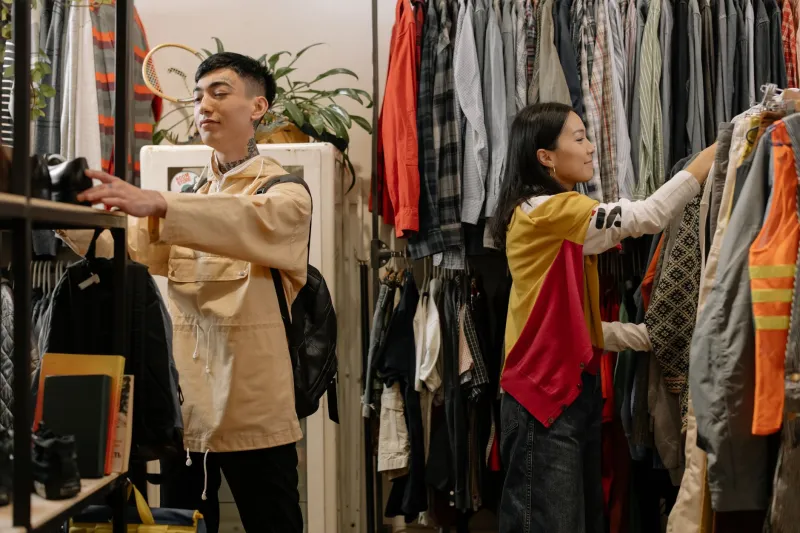
Mia Trần remembers the hauls. Growing up, she watched her mom return from weekend shopping trips with bags from the Asian mall, discount clothing stores, and occasional Costco runs — practical, affordable, volume-focused. You bought what was on sale. You stocked up. You didn't waste.
Now 24 and living in the Bay Area, Mia's approach to getting dressed looks completely different. Her closet is smaller, her pieces are mostly secondhand, and she spends more time on Depop and Poshmark than she ever would at a fast fashion retailer. She's not unusual in her social circle. Among young Vietnamese Americans she knows, the shift away from bulk buying and toward intentional, often used clothing is something she sees everywhere.
"My parents' generation shopped out of necessity and scarcity," she says. "We grew up with abundance and kind of broke under the weight of it."
The Haul Mentality and Where It Came From
To understand the shift, you have to understand what's being shifted away from. For many Vietnamese immigrant families, especially those who came to the US with very little, the ability to buy in volume was a marker of stability and success. Clothes that wore out fast were replaced. Deals were maximized. The idea of deliberately buying less — or buying used — carried a stigma rooted in real deprivation.
Fast fashion made this accessible at scale. Brands like Shein, Fashion Nova, and a rotating cast of mall anchors gave working-class and middle-class Vietnamese American families the ability to look current without spending current. The haul wasn't just a shopping habit; it was a cultural expression of making it.
For their kids, though, the calculus shifted. Growing up with enough, and growing up online in an era of climate anxiety and social critique of fast fashion, many second-generation Vietnamese Americans developed a complicated relationship with that same abundance.
The Environmental Layer Is Real, But It's Not the Whole Story
Ask young Vietnamese American shoppers why they thrift and you'll get environmental answers — concern about textile waste, the carbon footprint of fast fashion, the human cost of cheap manufacturing. These values are genuine and increasingly mainstream among Gen Z across demographics.
But for Vietnamese American young people specifically, there's often a cultural layer underneath the environmental one. Some describe a reaction against the visible excess of haul culture — the unboxing videos, the try-on piles, the sense that value comes from quantity. Others frame it as a reclamation of the resourcefulness their parents actually modeled, just expressed differently. Their parents fixed things and didn't waste food; they thrift and don't waste fabric.
There's also an identity dimension. Thrifting and vintage shopping offer a way to dress distinctively without buying into mass-produced aesthetics. For a generation navigating what it means to be Vietnamese American in a visual culture that still largely ignores them, building a wardrobe from unique, curated pieces can feel like a form of self-expression that fast fashion simply can't offer.
The Platforms Winning This Demographic
The resale and rental fashion market has exploded in the US over the past several years, and Vietnamese American Gen Z shoppers are active participants across multiple platforms.
Depop tends to attract the style-forward end of this demographic — people hunting for vintage pieces, Y2K references, or specific aesthetics they're building intentionally. It's social in a way that resonates with younger shoppers, with seller profiles that function almost like mini-brands.
Poshmark is bigger and broader, useful for finding everyday basics and brand-name pieces at significant discounts. Vietnamese American sellers on Poshmark have also built real businesses selling curated secondhand clothing, which creates an interesting loop: the same community that's buying used is also building small enterprises around the circular fashion economy.
ThredUp and The RealReal serve slightly different segments — ThredUp for accessible everyday resale, The RealReal for the luxury-adjacent shopper who wants verified authenticity without full retail pricing.
Rent the Runway and similar rental platforms are gaining traction for occasion-specific needs. Buying a dress for one event feels increasingly wasteful to this cohort; renting it feels smarter.
Locally, Vietnamese American communities in cities like San Jose, Houston, and the DC metro area have also seen growth in informal secondhand networks — community Facebook groups, church bazaars, and neighborhood exchanges that echo the group-buying culture of older generations but applied to clothing instead of groceries.
What This Means for Traditional Vietnamese Retail
The generational shift creates real tension for Vietnamese American retail businesses that built their model on volume and value-focused fast fashion. The family-owned clothing stores in Vietnamese commercial corridors across the US were built to serve a customer who wanted affordable, current, practical clothing. That customer still exists — but a growing segment of the next generation doesn't shop that way anymore.
Some businesses are adapting. A handful of Vietnamese American boutique owners have pivoted to curated vintage and secondhand sections, recognizing that the aesthetic appeal of thrifting can coexist with a retail setting. Others are leaning into authenticity and craft — ao dài makers, custom tailors, and cultural clothing artisans who offer something that fast fashion and thrift stores alike can't replicate.
For Vietnamese-focused e-commerce, the signal is worth paying attention to. Platforms and sellers who can credibly speak to quality, longevity, and intentionality — rather than just price and volume — are better positioned with this demographic than those still leading with haul-style marketing.
The Tension That Doesn't Fully Resolve
It would be tidy to say this is a clean generational break — parents shopped one way, kids shop another, everyone moves on. But it's messier than that. Many young Vietnamese Americans hold both values simultaneously: the thriftiness their parents modeled and the environmental and aesthetic values they've developed themselves. Thrifting, in many ways, is a synthesis. It's frugal and intentional. It honors resourcefulness without honoring excess.
And there's still real economic pressure in this demographic. Not every Vietnamese American Gen Z shopper is thrifting purely out of values. Some are doing it because rent is brutal and fast fashion budgets don't survive a San Jose or DC cost of living. The circular economy, in that sense, is also just practical — which is something their parents would recognize immediately.
What's clear is that the retail assumptions built around Vietnamese American shoppers — that they prioritize volume, price above all, and accessibility over curation — are being actively revised by the generation that grew up inside those assumptions and decided to shop differently.
At Siêu Thị Vai Ký, we think that's worth watching closely.